Categories Lighting

LED Lights Versus ‘Regular’ Light Bulbs

LED lights

You can buy an incandescent lightbulb for under a dollar. LED lights cost more upfront. But the energy efficiency and money-savings are huge. LED lights appeal to everyone.

Those concerned with planet preservation and conserving energy appreciate the amazing energy efficiency of LEDs vs. traditional lightbulbs. There are also people who could care less about global energy use, fossil fuels, and carbon footprints. But they care about saving money.

LEDs reduce the increasing demand for electric energy. Therefore, monthly electric bills are much less when you upgrade regular bulbs to LED lights.

LED Lights Cost Less

A “regular” lightbulb (60 watts) will last up to 1,000 hours* (at the most). You’ll need to buy 35 lightbulbs ($35) over a 4-year timespan. Four years is about the least amount of time an LED light (6 watts) will last.

Your time is also money. Compare the cost of purchasing one LED light ($5) vs. 35 regular lightbulbs ($35). If you factor in the time and expense you’ll put into buying 35 lightbulbs (even if you shop at Costco), you’ll quickly understand how LEDs save money and time.

LED Lighting: The Historical Difference

Texas Instruments technology developers invented an infrared light in 1961 but it was too small to be useful. In 1962, General Electric’s Nick Holonyak, Jr. (Father of the Light-Emitting Diode) invented the first LED that emitted significant light. In 1972, George Craford of Monsanto developed a brighter LED that led to the lighting now used worldwide.

LEDs are evolving technologically faster than any light source ever. They have improved in performance and become more affordable.

Traditional light bulbs are:

  • CFL – Compact fluorescent lamps are tube-like lights used in many workplaces. CFLs contain argon gas and traces of mercury. An electric current passing through the tube creates ultraviolet light. CFLs are more energy-efficient and last longer than incandescent and halogen bulbs.
  • Halogen – These are brighter than traditional incandescents because the tungsten filament is encased in an inert-gas-filled frame to burn brighter and longer.
  • Incandescent – Glass bulbs encase a tungsten filament that is heated by electricity. They aren’t energy-efficient, don’t last very long, and emit a lot of heat.

If you’ve ever burned your fingertips changing a “hot” lightbulb (never a good idea, but most of us have done it), you can appreciate how cool LED lights are.

  • LED – Electricity flows through a microchip (light-emitting diode). Cool-to-the-touch LEDs are the new standard in U.S. lighting.

TIO Electric Professionals Set the Standard for Quality Electrical Solutions

LEDs have come a long way in a short period of time.
–inspirecleanenergy.com

Another way to say “efficient” is “good organization.” Our company is a lot like LED lights. Turn It On Electric technology and productivity has grown annually since its founding 12 years ago. Our quality is much better than competitors. And like LEDs, we’re energy-efficiency experts that offer a wide range of services.

If LED lights could be passionate about doing a great job, they’d be a lot like TIO Electric.

Ask us about ways to save energy and lower electric bills. Call TIO Electric or contact us online.

___
*All numbers are estimates.

Categories Lighting

6 Places To Use LED Lighting in the Home

LED Lighting

The light-emitting diode (LED) is today’s most energy-efficient and rapidly developing lighting technology. Quality LED lightbulbs last longer, are more durable and offer comparable or better light quality than other types of lighting.
–energy.gov

The advantages of LED lighting are without dispute. LED lighting delivers quality illumination 40-50 times longer than incandescent lightbulbs. This means replacement LED lightbulbs can last anywhere from 5-10 years or longer. They’ll improve energy efficiency by as much as 50%-90%, depending on the types of bulbs you replaced.

Other differences between LED and incandescent bulbs include:

  • Incandescent bulbs need lampshades and fixtures to deflect lighting. Sometimes half the light emitted never leaves its source. LED lighting is more directional. (Task lighting is more effective with LEDs than incandescent.)
  • Incandescent bulbs release 90% of their energy as heat, while LEDs are much cooler (and safer).
  • LEDs last much longer.

Home LED Lighting

Upgrading your home to LED lighting is a fun family project. You can educate youngsters by sharing ways to save energy and lower expenses. Whole-house LED lighting is also a good investment.

Carefully wrap discarded bulbs before placing them in trashbags. (Most Lowe’s and Home Depot stores accept lightbulbs for recycling, but call before you go.)

LED light upgrades are perfect for:

  1. Bathrooms – Lighting can be bright and functional for facial cleaning and makeup applications or appealing and mood-setting for relaxing tub soaks.
    • Linen closets
    • Mirrors
  2. Bedrooms – Set the tone for relaxation with LED accent lights, lamps, and reading lights. You can also use LED lights to illuminate focal points with flair.
    • Closets
    • Under the bed
  3. Kitchens – The most high-traffic room in the house needs a lot of light.
    • Under lower cabinets near floor
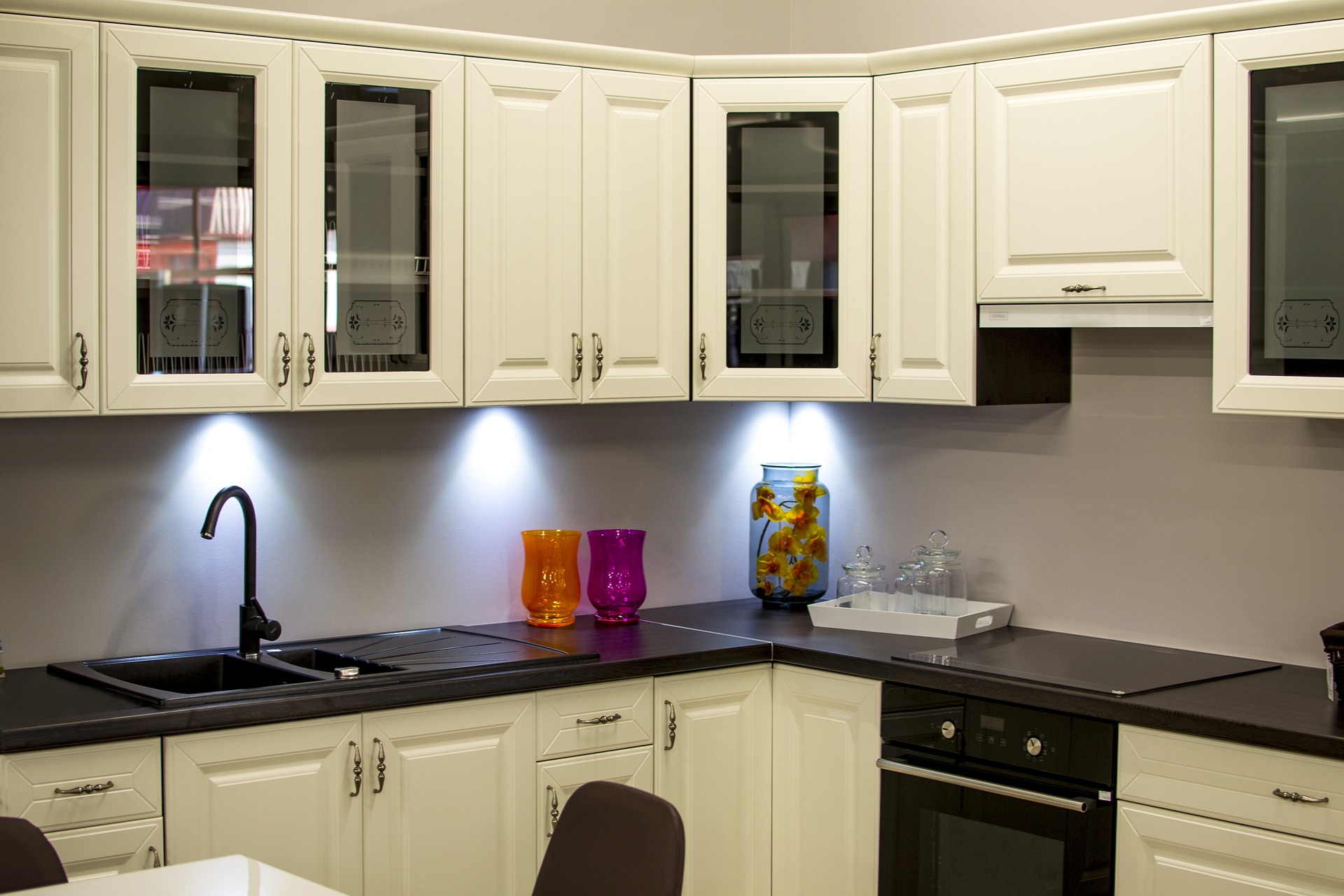
    • Under upper cabinets to illuminate workspace/countertops/sink
  4. Living rooms – This area’s lighting helps entertain visitors or enhances relaxation at day’s end.
    • Behind big-screen televisions (Multicolors are popular.)
    • Downlighting above photos/art exhibits
    • Uplighting underneath display shelving
  5. Porches – All-night lights will last years when LED bulbs are used.
  6. Stairways – Attractive lighting can also add safety.

What are LED Light Strips & Ropes?

LED light strips are several surface-mounted LED lights or “chips” affixed to a tape. They can illuminate a wider area and are usually brighter than LED ropes. They are also dimmable and you can change the colors.

LED ropes are small bulbs encased in plastic tubes. You can buy multicolored or specific bulb-color ropes, but you can’t change the bulbs. Rope lights aren’t much dimmer than tape lights, but if brightness is needed for a work area, go with tape LED lights.

Commercial, Industrial LED Lighting

You’re familiar with residential LED lighting. Commercial and industrial LED lights are usually not the same as residential. These low-maintenance and long-lasting lights are also more temperature-friendly for areas in which high heat is an issue.

Commercial LED lighting is designed for:

  • Hotels
  • Offices
  • Public outdoor areas
  • Restaurants
  • Retail stores
  • …and more

Industrial lighting is more durably designed to illuminate tougher workspaces. These lights are usually located on ceilings higher than 20´, including:

  • Chemicals/hazardous materials’ manufacturing/storage
  • Fixed/in-place heavy machinery/equipment
  • Mines
  • Production/factory facilities
  • Refineries
  • …and more

Central Arizona’s Electrical Contractor

If you’re planning a spring or summer home project, Turn It On Electric professionals may have some illuminating ideas (pun intended). Effective lighting can make a good project great.

We’re also available to discuss the best locations and voltage for lighting additions and upgrades. We will work with other contractors to deliver your project on time and within budget.

To learn more about ways to use LED lighting in your home or office, contact TIO Electric.