Categories Residential

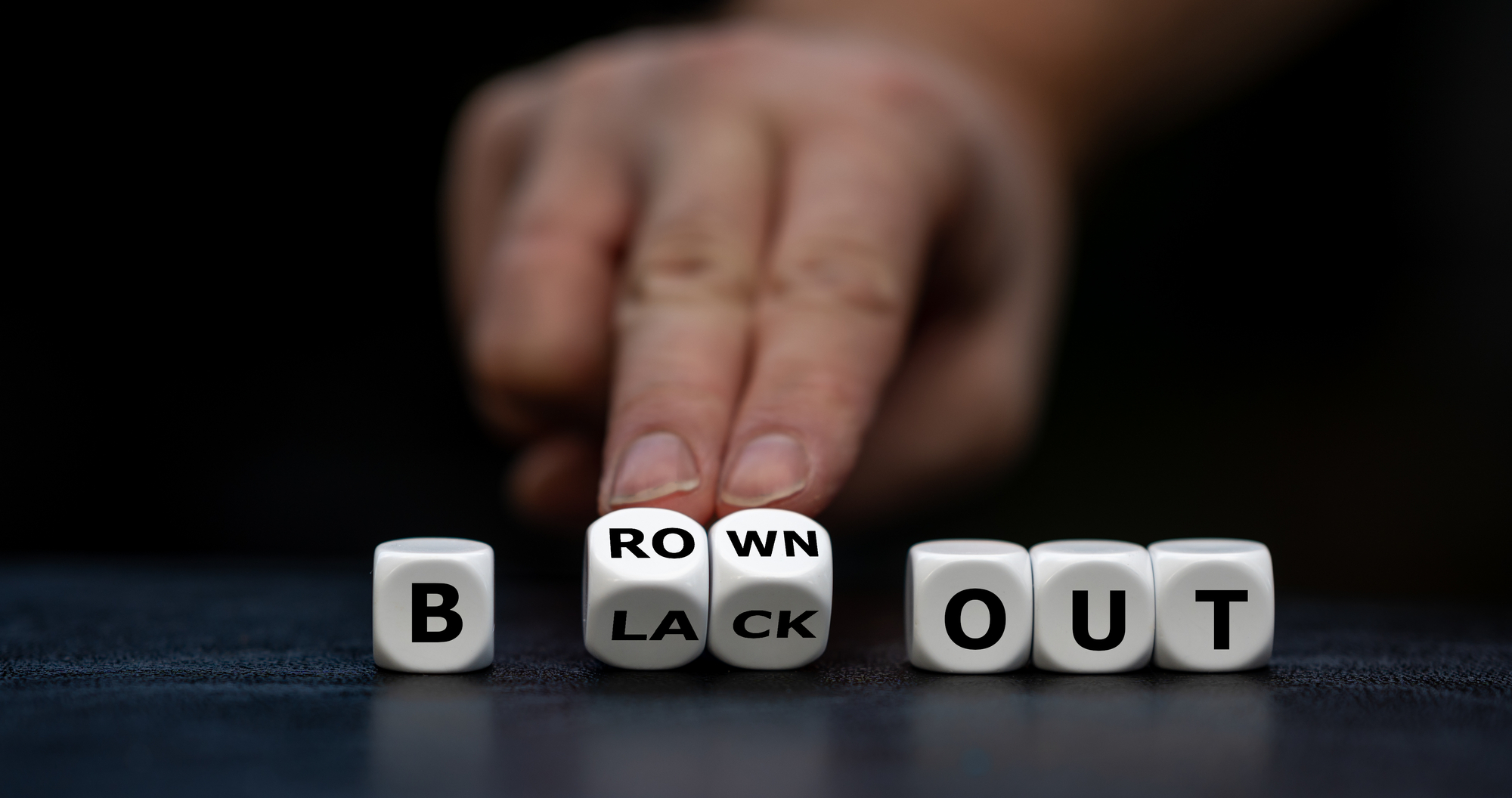
What’s the Difference Between a Brownout and a Blackout?

brownout

A brownout is a short-term reduction of voltage within an area’s major electrical supply system. The term “brownout” comes from the way your home’s lights may dim when the voltage reduction occurs. Sometimes, brownouts are scheduled by your energy service provider to lower electrical loads during heavy use or to avoid an emergency overload. Brownouts last minutes or a few hours.

Blackouts are not power reductions. They are complete losses of power in one or more communities. They usually occur because of extreme weather or an energy supplier’s equipment failure. Blackouts can also be used to better manage energy consumption, but most are unplanned.

Catastrophic Blackout & The New Zealand Brownout

In 2003, more than 50 million people suffered the largest North American blackout in history. Ontario, Canada and Connecticut, Michigan, New Jersey, New York, Ohio, Pennsylvania, and Vermont in the northeast U.S. lost power on a hot, humid August day. When stoplights quit working in New York City, the traffic gridlocks were like never before. The NY subway stopped, literally, in its tracks.

In Detroit, this blackout was followed by massive rainfall which caused widespread flooding because sump pumps didn’t work. Backup generators also lost power.

New Zealand’s 66-day brownout was caused by one, small cable failure. The increased demand for electricity from that failure then caused a domino effect. One by one, areas began having power interruptions.

Which Is Worse? Brownout vs. Blackout

Many say brownouts are worse than blackouts. The difference is that a brownout supplies your home with shut-downs, slow-downs, or dangerously increased power surges. A blackout’s total shutdown is actually better for your home appliances and electronics.

Several critical home electronics are more vulnerable to a brownout’s temporary power interruption or surges than others:

  • Major components – Brownouts can damage your home’s major electrical components, which are:
    • Breaker box
    • Circuitry
    • Meter
    • Wiring
  • Basic components – Some of the basic components that can be damaged by a brownout include:
    • Batteries
    • Cables
    • Capacitors
    • Fuses
    • Inductors
    • Light Emitting Diodes (LEDs)
    • Resistors
    • Switches
    • Transformer boxes
    • Transistors
  • Motors – Electric motors supply power to large appliances, including:
    • Air conditioners
    • Ceiling fans
    • Clothes dryers
    • Freezers
    • Refrigerators
    • Washing machines
    • …and more

Surge protection devices (SPDs) are designed to protect your home from brownouts and blackout damage. Other protective electrical upgrades can include:

  • ESS – Energy storage systems are often paired with solar systems or used in industrial settings.
  • Generators – Portable and standby generators are used in many homes and industrial settings. It’s critical that your Phoenix-area local electrician install the transfer switch.
  • MUC – Multi-utility controllers (smart meters) “communicate vital information between your home’s need for electricity and your energy services provider.
  • UPS – An uninterruptible power supply can provide battery backup to protect important electronics.

SPD Electrical Upgrades for Arizona Homes

In 2022, Arizona power companies alerted property owners that blackouts could be the wave of the future. Some of the factors cited by the utility companies were:

  • Droughts
  • Not enough power plants
  • Rising temperatures
  • Slow adoption of solar energy
  • Wildfires

One of the most popular solutions in the Valley has been whole-house surge protection. These SPDs provide point-of-protection at every wall outlet as well as the main panel. Your home averages more than $15,000 worth of appliances and equipment that need protection from power surges. An electrical upgrade that includes surge suppression is well worth the investment.

If you’d like to learn more about ways to defend your home against brownouts and blackouts, contact Turn It On Electric.


Categories Residential

What To Do After a Power Outage

power outage

A power outage (also called “powercuts,” “power failures,” or “blackouts,”) is the loss of electrical energy from your network supplier. There are many causes of area-wide or single-property power outages, including:

  • Cascading failure (system overload)
  • Circuit breaker/fuse problems
  • Line or distribution system damage
  • Power station or substation issues/damages
  • Rotation to save energy/stabilize the grid
  • Short circuits
  • Substation problems/damages

There are several things you can do in advance of a predicted power outage, and there are safety precautions to follow during one. Most people don’t realize there are also several important steps to take after a power outage.

Before, During, and After a Power Outage in Arizona

If Texas could have anticipated its devastating power grid failure during the winter storm of 2021, it could have alerted residents. There are steps you can take in anticipation of and during a power outage. The first thing to do if you expect a power outage is to keep refrigerator and freezer doors closed.

You should always be prepared for a power outage:

  • Consider getting a small, battery-powered television.
  • Inventory everything in your house that needs electricity.
  • Make an emergency go-kit for your home and car. Kits should have food, water, and essential medical items.
  • Remember, ATMs and gas stations need electricity to operate too. Have a cash stash and vehicle fuel supply just in case.

During the outage:

  • Check on your neighbors.
  • Continue to keep refrigerator and freezer doors closed.
  • Choose flashlights for illumination rather than candles.
  • Disconnect PCs and plug-in technology devices.  (The power surge when electricity is restored can damage electronics.) But leave one light turned on so you’ll know when the power returns.
  • If heat or cold is life-threatening, leave your home and seek shelter.
  • Turn off and disconnect appliances, especially those that were running when the outage occurred (dishwasher, washer/dryer, etc.). 

Following a power outage:

  • Be sure to test your HVAC (heating, ventilation, air conditioning) system or schedule a service call. 
  • If the power was out longer than one day, discard all refrigerated medicines and request replacements.
  • Inspect all power outlets for signs of damage.

Refrigerated Foods: Don’t Take Chances After a Power Outage

If you need to reset your refrigerator’s thermostat, 37° is recommended for the fridge and 0° for the freezer. Toss all refrigerated and frozen foods that warmed to 40° F or higher for longer than two hours. You can use the same meat thermometer you use for baking and grilling to determine if your meat is too warm to re-freeze or re-refrigerate.

If a food’s color or texture seems off, throw it out. If it smells “funny,” throw it out. If freezer foods have ice crystals resulting from too-high temperatures for too long, throw them out.

Some foods may look and smell and even taste okay. But bacteria grow quickly. Some contaminants cannot be destroyed by cooking or even frying at high temperatures. 

If these foods were warmed to 40° F for more than two hours, throw them away:

  • Eggs
  • Fish/shellfish
  • Leftovers
  • Meat
  • Poultry

“When in doubt, throw it out.”

Prevent Power Outage Damages

After a power outage, unplug, re-plug, repower, and reset all electronic devices. There is often a power surge when electricity returns, so do a damage assessment of any plugged-in appliances and electronic equipment.

A power surge following an outage can wreak havoc. Power surge protection can prevent damage when electrical power turns off and on unexpectedly.

Smart homeowners consider whole-house surge protection devices (SPDs). SPDs can provide as much as 40,000-amp surge protection and point-of-use safety at all home or office wall outlets. They also reduce fire risks and save money by lowering monthly energy use.

Whole-house SPD installation is one of the services your Phoenix professional electricians at Turn It On Electric provide. To learn more about increased personal and property safety, contact TIO Electric.